The Ultimate Guide to Vintage and Antique Rugs
What Makes a Rug Vintage or Antique?
A rug is generally considered antique if it is 100 years old or more. A vintage rug typically refers to a piece between 30 and 99 years old — old enough to have accumulated character and patina, but not yet qualifying as a full antique. Age alone doesn’t determine value — condition, rarity, provenance, and artistic quality all play a role. But for many collectors and interior designers, the gentle fading and softening of colours that comes with decades of use are not flaws to be corrected but qualities to be celebrated.
Why Buy a Vintage or Antique Rug?
No two vintage rugs are exactly alike, and with antique pieces especially, you are acquiring something that simply cannot be replicated. The dyes, the wool, the hand-spinning techniques — all contribute to a quality and character that modern production cannot reproduce.
Vintage rugs also tend to be exceptionally durable. A rug that has already survived decades of use has proven its quality. The wool used in traditional rug-weaving regions was often hand-spun with a high lanolin content, making it naturally resilient and lustrous in a way that machine-spun fibres are not.
Understanding Patina and Abrash
Patina refers to the subtle sheen and mellowing of colour that develops with age — natural dyes fade gracefully over time, moving from vivid to a softer, more complex tone. Abrash is the variation in colour intensity that occurs within the same colour family across a rug’s surface, resulting from different batches of hand-dyed wool being used during weaving. Rather than being a defect, abrash is considered a mark of authenticity and handmade quality.
Key Styles to Know
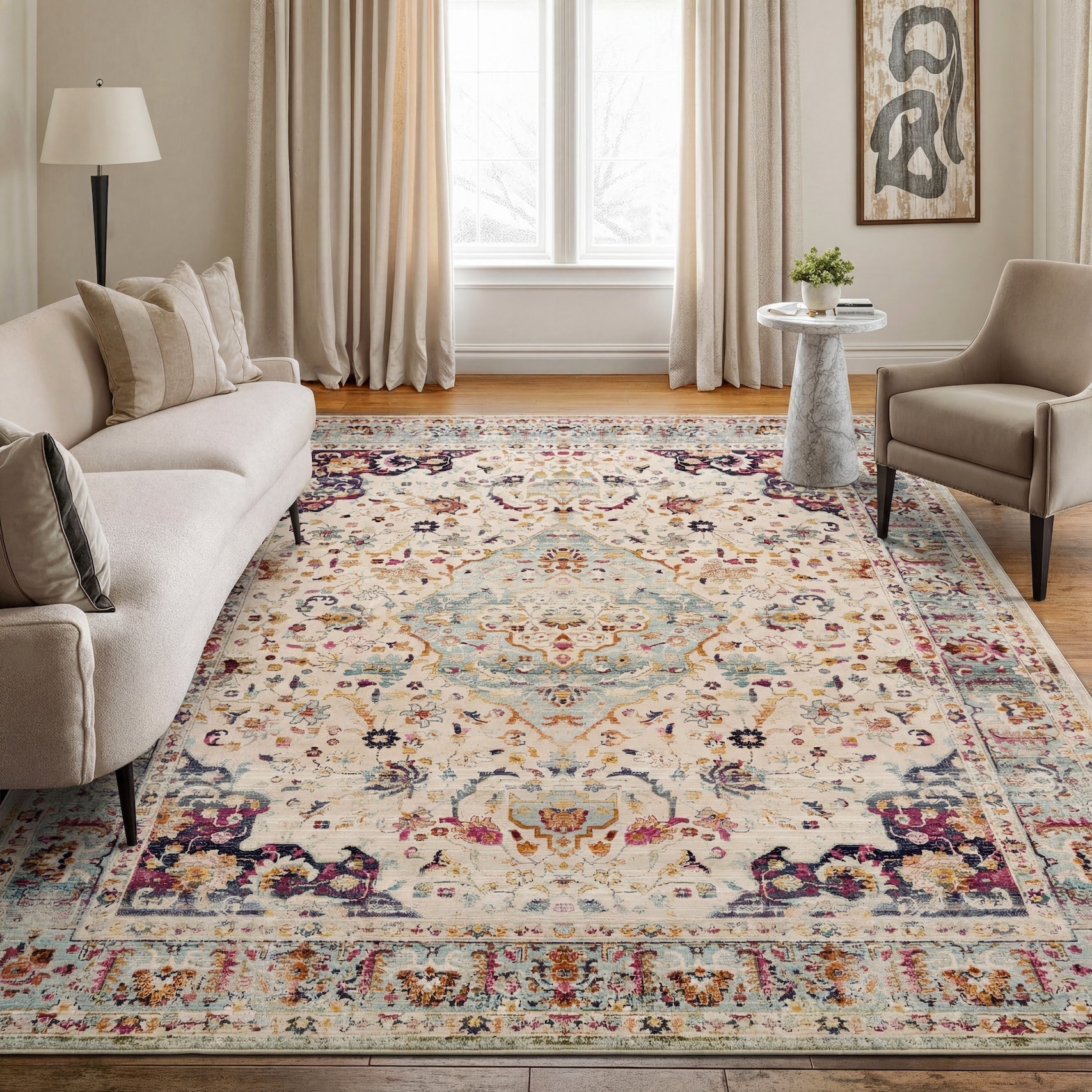
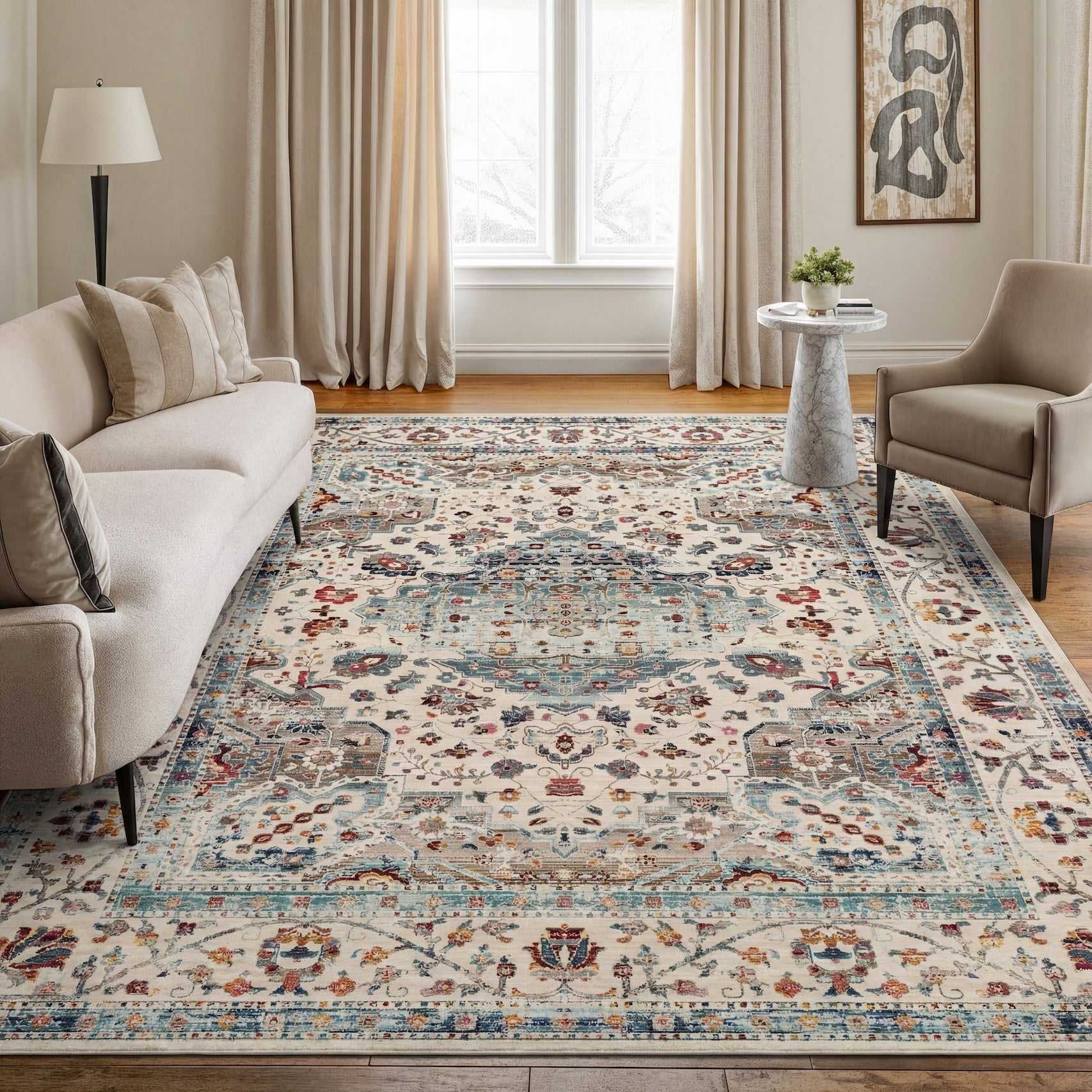
Persian antique rugs from cities like Tabriz, Isfahan, Kashan, and Heriz are among the most sought-after in the world. Turkish or Anatolian rugs, including Oushak pieces with their distinctive soft colours and geometric patterns, are hugely popular in contemporary interiors. Caucasian rugs from regions like Azerbaijan and Armenia tend to feature bold geometric patterns in vibrant colours. Moroccan Berber rugs, with their abstract designs and thick pile, work particularly well in Scandi and bohemian-influenced interiors.
How to Assess Condition
Examine the pile height — a rug that has been heavily worn will have areas of flat or missing pile. Check the foundation threads for any rot or damage, which can indicate water exposure. Look at the edges and fringe, which are often the first areas to show significant wear. Some wear is entirely acceptable — even desirable — in a very old rug. However, structural damage such as holes, tears, or rot requires professional restoration.
Caring for a Vintage or Antique Rug
Vacuum gently using a low-suction setting and avoid running the vacuum over the fringes. Rotate the rug periodically to ensure even wear. Keep it away from prolonged direct sunlight, which can fade natural dyes unevenly. If the rug gets wet, dry it flat and face-down to prevent the natural dyes from bleeding. For deep cleaning, always seek a specialist who understands antique textiles.
At Kelaty, we can help you navigate the world of vintage and antique rugs with expert guidance.