Autumn Interiors: How to Warm a Room for the Colder Months
The end of August is the moment the year turns, quietly and before anyone acknowledges it. The evenings shorten noticeably, the sun sits lower, and the light coming through a window changes colour. Nothing in the room has altered, but the room is not the same.
This is the useful window. Warming a house for autumn is far easier done in advance than in the middle of a cold snap, and most of what needs doing is neither expensive nor permanent.
The Physical Case First
Before any question of style, there is a straightforward matter of heat. A hard floor — stone, tile, laminate, boards over a ventilated void — conducts warmth away from your feet quickly, and pulls warmth out of the room from below. A textile floor covering traps air within its structure, and trapped air is one of the better insulators available. That is why a rug on a cold floor is genuine insulation rather than a decorative gesture.
The effect on how a room feels is out of proportion to the thickness involved. Comfort is not the same as air temperature: it depends heavily on what your skin is in contact with and what surfaces are radiating around you. A room with a rug in it feels warmer at the same thermostat setting than the same room bare, because your feet are no longer in contact with a surface that draws heat out of them. Whether that lets you turn the heating down is a matter of household habit, but it is a real effect and a sensible one to make use of.
Why the Light Changes Everything
The second reason rooms feel different in autumn has nothing to do with temperature. Summer light in Britain is high, bright and comparatively cool. Autumn light is low, weak and much warmer in tone, and it arrives at a shallow angle for a few hours rather than flooding the room all day.
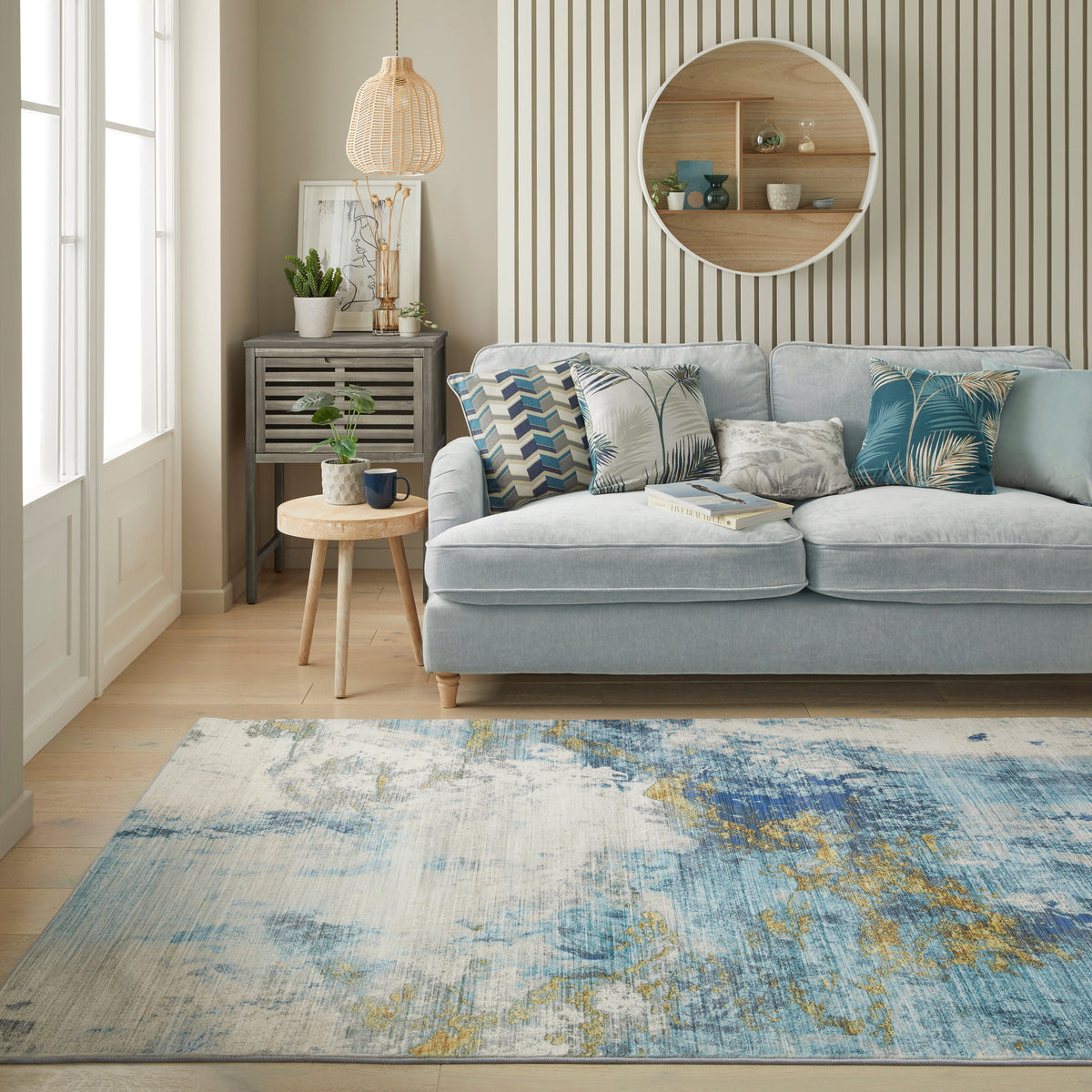
A cool grey scheme is designed, whether deliberately or not, for the first kind of light. Grey with a blue undertone reads as crisp and clean under bright summer light. Put the same grey under low October light and it goes flat and slightly cold — not obviously wrong, just unwelcoming in a way that is hard to identify. Most people conclude the room needs redecorating. Usually it just needs warming.
What to Change Without Redecorating
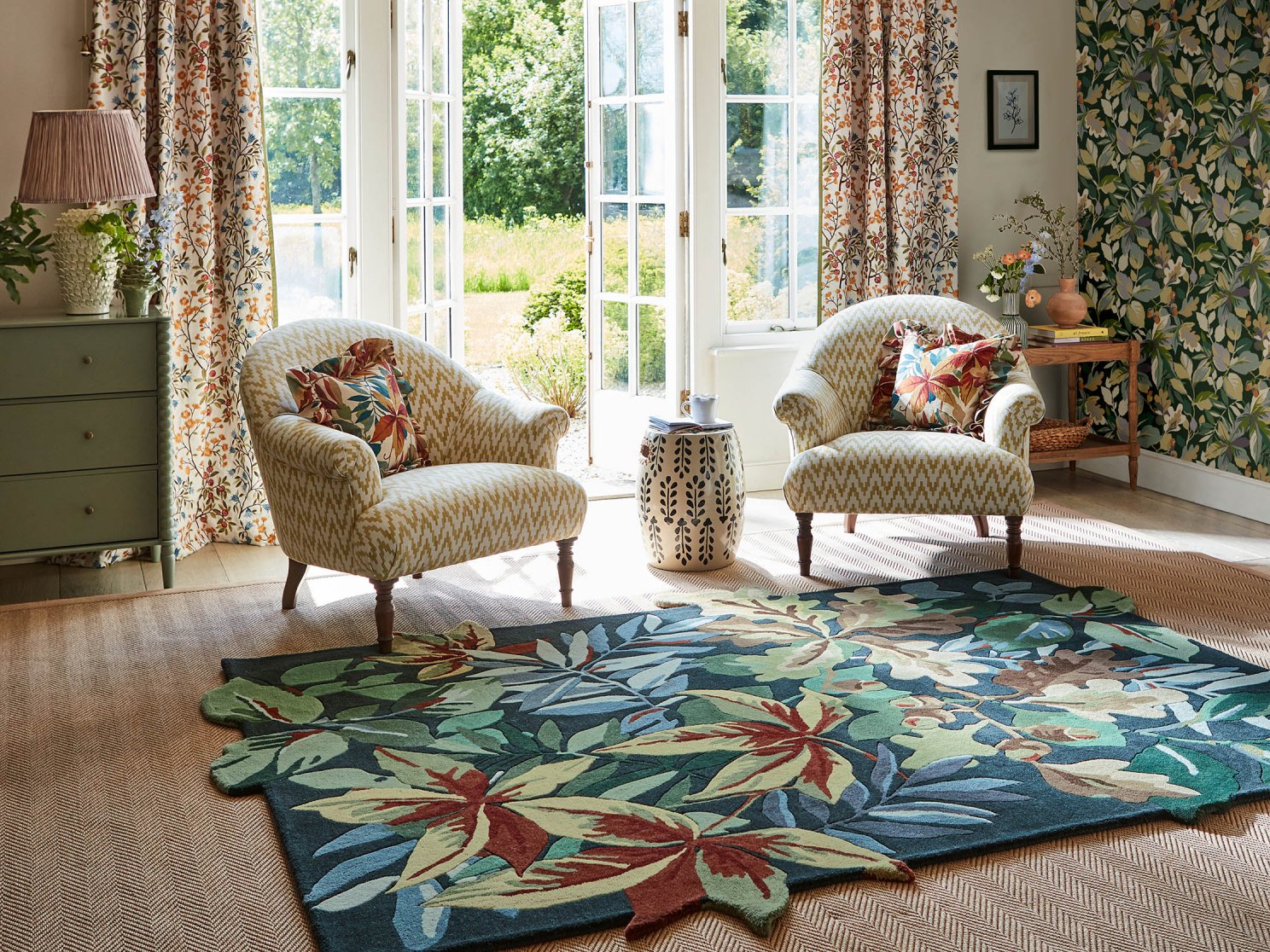
The floor is the largest single surface you can change without touching a wall, which makes it the most efficient thing to change. Swapping a flat, cool-toned rug for something with depth and warmth in it alters the whole balance of a room in an afternoon. If there is no rug at all, adding one does more than any other single intervention.
After that, work in texture rather than colour. Autumn interiors read as warm largely because of the number of different surfaces in them — a wool throw over an arm, a heavier curtain, a couple of cushions in something with a nap to it, a basket, a lampshade in linen rather than glass. Texture catches low light and breaks it up, which is precisely what a room needs when the light is thin.
Then move the furniture in. Summer arrangements tend to be open and spread out towards the windows. Pulling seating closer together and closer to whatever the room's focal point is — a fire, a lamp, a low table — makes a space feel considerably more sheltered, and it costs nothing. Finally, deal with the lighting: turn off the overhead and put two or three low lamps around the room instead. Light from below head height at a warm colour temperature does more for a cold room in October than almost anything else.

Colour Direction for Autumn
The palette that works from September onwards is the one the season provides: rust and deep terracotta, ochre and mustard, olive and moss, and the warm neutrals — oatmeal, putty, mushroom, a stone with yellow in it rather than blue.
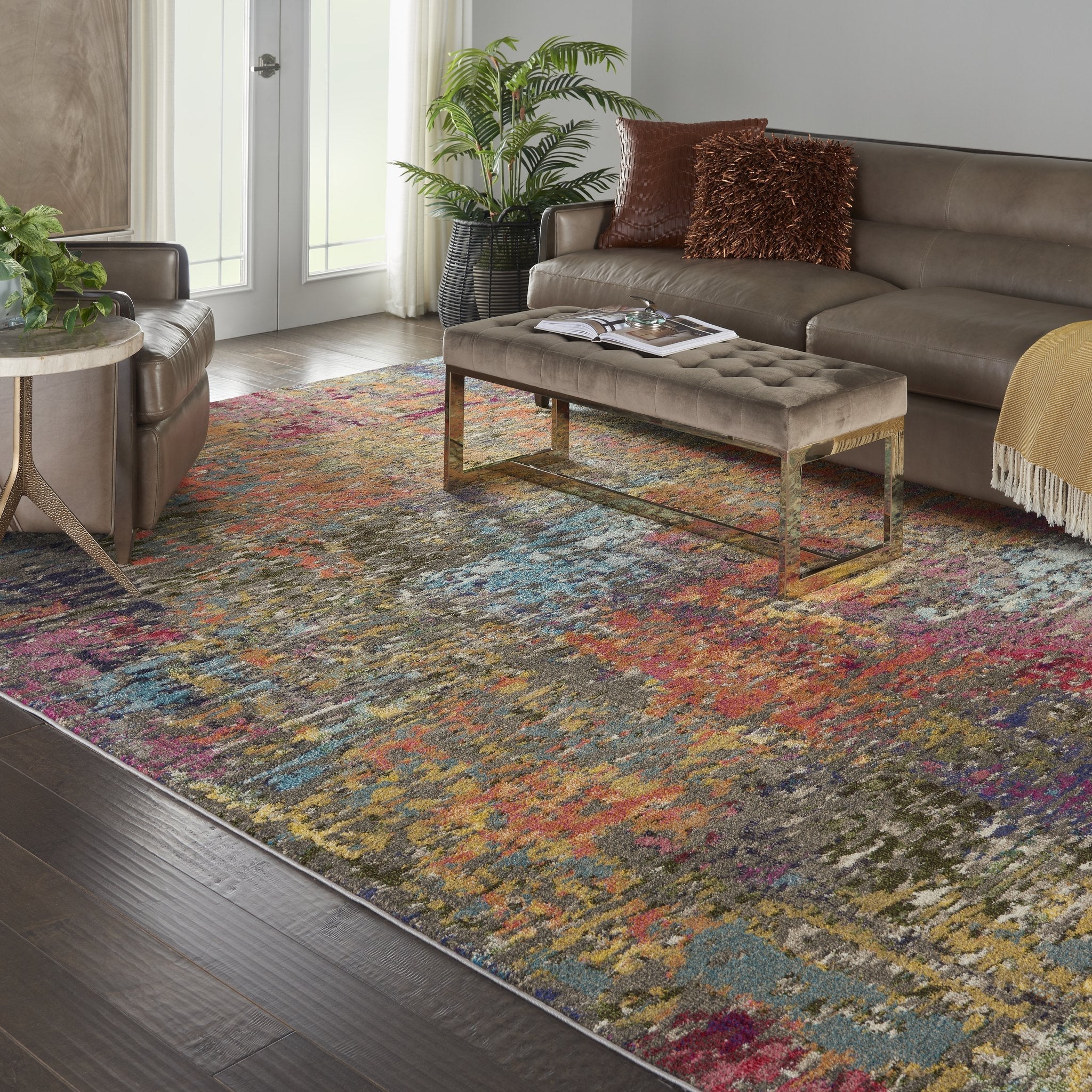
The mistake is to commit the whole room. These colours are strong, and a room done wholesale in rust and ochre in September will feel oppressive by February. The better approach is to keep the large surfaces neutral and introduce the warmth in the elements you can change: the rug, the cushions, a throw, perhaps one chair. A rug carrying rust and olive in a patterned ground will warm an entire grey room while remaining easy to live with, because the colour is broken up rather than presented as a block.
If your existing scheme is cool, you do not need to abandon it. Warm greys, taupes and soft browns bridge the gap comfortably, and a single genuinely warm accent will pull a cool scheme several degrees in the right direction.
Which Materials Feel Warm
Not all rugs insulate equally, and the difference underfoot is substantial.
Wool is the warmest fibre in common use. The natural crimp in the fibre traps air, the pile holds its loft, and it feels warm to the touch rather than merely soft. Deep pile of any fibre feels warmer than shallow, because depth means trapped air — the plains and shaggys are the obvious autumn choice for a bedroom or a snug. Dense, high-pile-weight constructions come next: a heavy rug with a lot of yarn packed into it insulates well even when the pile is short.
At the other end, a flatweave laid directly on tile or stone gives you very little thermal benefit, because there is no trapped air in it — excellent for a dining room, less so where you want warmth underfoot. Viscose feels cool and slick to the touch whatever the pile depth. Neither is a reason to avoid them; it is simply worth knowing which rooms they suit in winter. And a good underlay adds a surprising amount of insulation beneath any rug, as well as keeping it still.
A Seasonal Changeover
- Lift and clean the rugs, and vacuum the floor beneath them properly before the windows shut for the winter.
- Rotate each rug 180 degrees — summer sun will have faded one end more than the other.
- Check underlays; a flattened one has stopped doing its job on both grip and insulation.
- Swap lightweight throws and cushions for wool, and move the seating in.
Warming a Room at Kelaty
Wool pile, deep plains and warm-toned patterns all do the same job in different registers, and the right one depends on the room and how hard it works. If you are starting with the space where you will spend the winter evenings, browse the living room rugs.