Shaggy Rugs: A Practical Guide to Living With Deep Pile
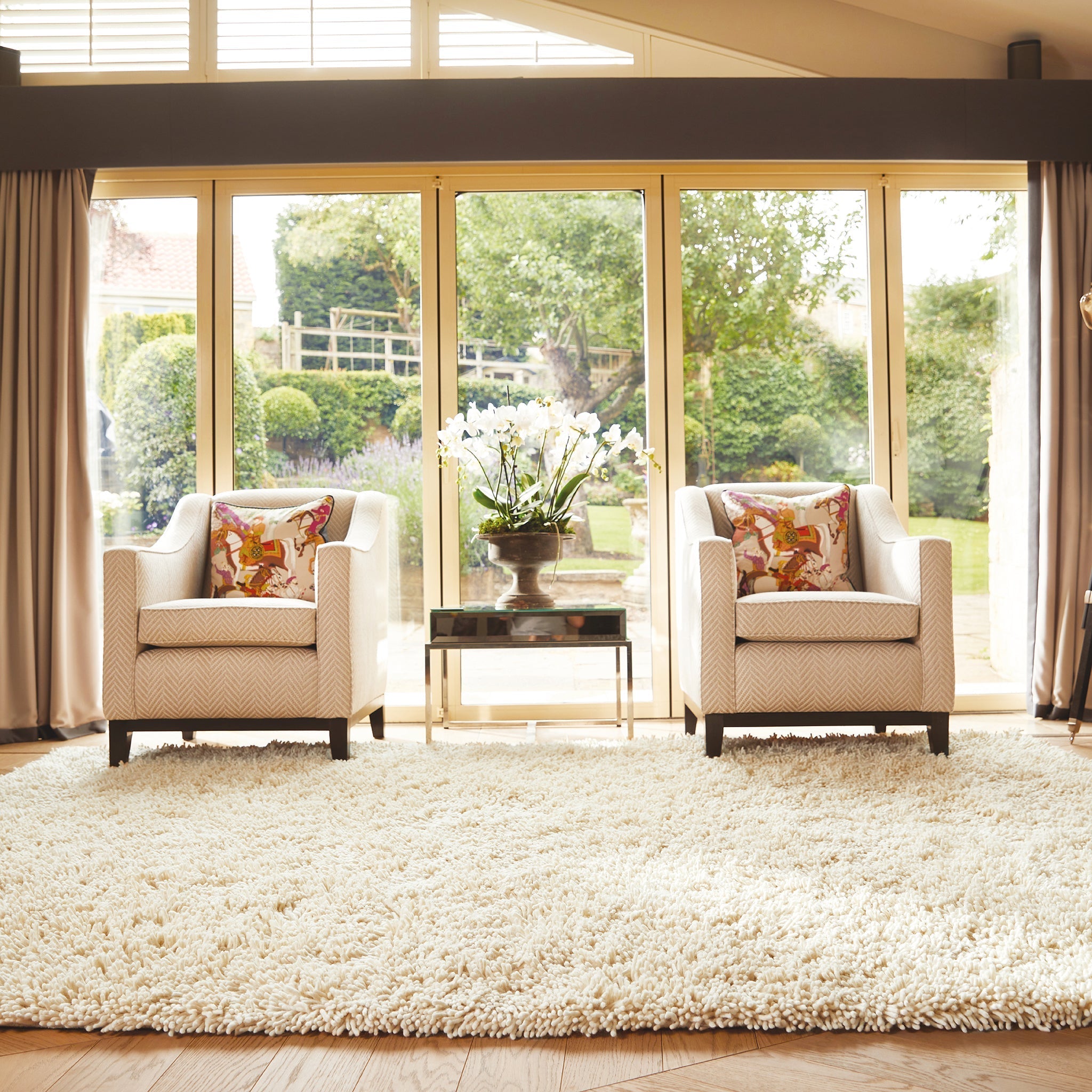
A shaggy rug is the most physical rug you can own. Everything about it is about touch — the length of the pile, the way it gives underfoot, the fact that you register it with your feet before your eyes. In the right room it is one of the very few furnishings that changes how a space feels to live in rather than simply how it looks.
In the wrong room it is a maintenance problem you signed up for without meaning to. Deep pile is not difficult, exactly, but it is particular, and most of the disappointment people have with shaggy rugs comes from putting one somewhere it was never going to succeed.
What follows is an honest account of where deep pile belongs, where it does not, and what living with one involves day to day.
Where a Shaggy Rug Works
The test is a simple one: bare feet, light traffic, no food. Wherever those three conditions hold, a shaggy rug is close to unbeatable.
Bedrooms are the obvious home for one. You cross a bedroom floor in socks or barefoot, you cross it a handful of times a day rather than constantly, and the pile does its best work at precisely the moment you most appreciate it — first thing in the morning, stepping out of bed onto something soft rather than onto a cold board. A deep pile either side of the bed, or one large rug running under the bed and out past the footboard, is among the most reliably pleasant decisions in the house, and it is why so much of the bedroom rug market is given over to plains and shaggys.
A snug or a reading corner is the second good case. These are rooms for sitting rather than passing through, and deep pile gives them a sense of enclosure that a flat rug cannot. The third is the space beside a bath, where a small shaggy in a synthetic fibre gives you somewhere warm to stand — though it must dry properly between uses, so a bathroom with no window and no extraction is not the place for one.
Where It Does Not
Dining rooms are the clearest failure. Food falls into a deep pile and stays there, below the reach of a vacuum, and the crumbs you cannot see are the ones that matter. Chair legs catch in long fibres and drag them out of alignment every time someone stands up. If you want a rug under a dining table, you want a low, dense pile or a flatweave.
Hallways are the second. A shaggy in a hallway will develop a crushed, shiny path within months, because the fibres are long enough to fold flat and there is nothing dense enough beneath them to hold them upright. Shoes bring in grit that works down to the base of the pile and cuts the fibres from below.
Under an office chair, a shaggy is close to unusable. Castors sink into the pile rather than rolling over it, and long fibres wrap around the wheels. In a home with long-haired pets, hair binds into deep pile in a way no domestic vacuum will fully undo — you can groom it out, but it becomes a weekly job.

How Different Fibres Behave
Wool
Wool is the most resilient fibre in deep pile because each fibre has a natural crimp that wants to spring back. Sit on a wool shaggy, get up, and the pile recovers over the following hours. It is warm, it resists soiling, and it ages gracefully rather than wearing out abruptly. It sheds loose fibres for the first few months, which is normal, and it costs more than the alternatives.
Polyester
Polyester makes the softest shaggys on the market and holds colour extremely well — the deep, saturated tones that look so good in a photograph are usually polyester. What it does not have is resilience. Under repeated pressure the fibres stay where they are pushed, so a polyester shaggy in a busy spot flattens and does not come back. In a bedroom it can be a delight for years. In a sitting room it will show its traffic.
Polypropylene
Polypropylene is the hard-wearing, stain-resistant option, and it is the sensible choice for a shaggy that has to cope with a family. It is less soft than polyester and can have a slight sheen, but it takes cleaning well and shrugs off spills that would mark wool. If a shaggy is going somewhere semi-busy, this is the fibre that will forgive you.
Managing the Flattening
All deep pile flattens; the question is whether it recovers. Two things cause it — footfall along a fixed route, and furniture legs standing in one place for months. Both are manageable.
Rotate the rug 180 degrees every three or four months so the wear path moves. Shift heavy furniture a few centimetres when you rotate, which is enough to stop a permanent dent forming. Where a leg has already made an indentation, a light mist of water on a wool pile followed by gentle teasing with your fingers will usually lift it. Above all, groom the rug: a rug rake or a wide-toothed comb drawn through the pile lifts the fibres upright and restores the loft far better than any vacuum. Never take scissors to a shaggy to tidy it — trimming a long pile flat is irreversible, and it always shows.
Everyday Care
- Vacuum with suction only. Switch the beater bar off, or use the floor head or upholstery tool, and work in the direction the pile lies.
- Vacuum less often but more thoroughly, and lift the rug occasionally to clear the grit that has fallen through to the floor beneath.
- Take it outside and shake it. On a deep pile this removes more than any machine will.
- Blot spills immediately, working from the outside in, and never rub — rubbing tangles long fibres permanently.
One practical note before you buy: a deep pile can be tall enough to foul an inward-opening door, so measure the clearance under the door before you commit. And on any hard floor, a shaggy needs an underlay — partly to stop it sliding, partly because a good underlay absorbs the compression that would otherwise crush the pile from below.
Shaggy Rugs at Kelaty
Kelaty stocks deep pile in wool, polyester and polypropylene, in sizes from small bedside pieces up to room-filling rugs, alongside the low, dense plains that suit busier rooms. If you are weighing up which belongs where, browse the full Plains & Shaggys range.