Article: Striped Rugs: How to Use Lines to Shape, Stretch and Energise a Room
Striped Rugs: How to Use Lines to Shape, Stretch and Energise a Room
Few patterns are as adaptable as the stripe. It can be crisp and tailored, relaxed and coastal, bold and graphic or so subtle it reads almost as texture. On the floor, stripes do something other patterns cannot: they direct the eye, and in doing so they can change how a room's proportions are perceived. Used thoughtfully, a striped rug is one of the most useful tools a decorator has.
Stripes and the shape of a room
The direction of a stripe draws the eye along it. That simple principle gives you a surprising degree of control.
- Stripes running lengthways: lead the eye towards the far end of the room, making it feel longer. Ideal for hallways, landings and galley kitchens.
- Stripes running across the room: broaden a narrow space, which is helpful in slim terraced living rooms and box rooms.
- Stripes aligned with a focal point: lines that run towards a fireplace, window or bed reinforce it as the heart of the room.
Before you commit, lay a few strips of masking tape on the floor in each direction and see which feels right. For narrow spaces in particular, our guide to choosing the right hallway runner is a useful companion.
Choosing the right kind of stripe
- Fine and tonal stripes: narrow lines in closely related shades add quiet structure without drawing attention. They suit calm bedrooms and minimalist living rooms.
- Broad block stripes: wide bands of colour feel confident and modern, and work well in open-plan spaces where a rug needs presence.
- Irregular and varied stripes: lines of different widths feel more relaxed and handmade, and are easier to live with than strict, evenly spaced ones.
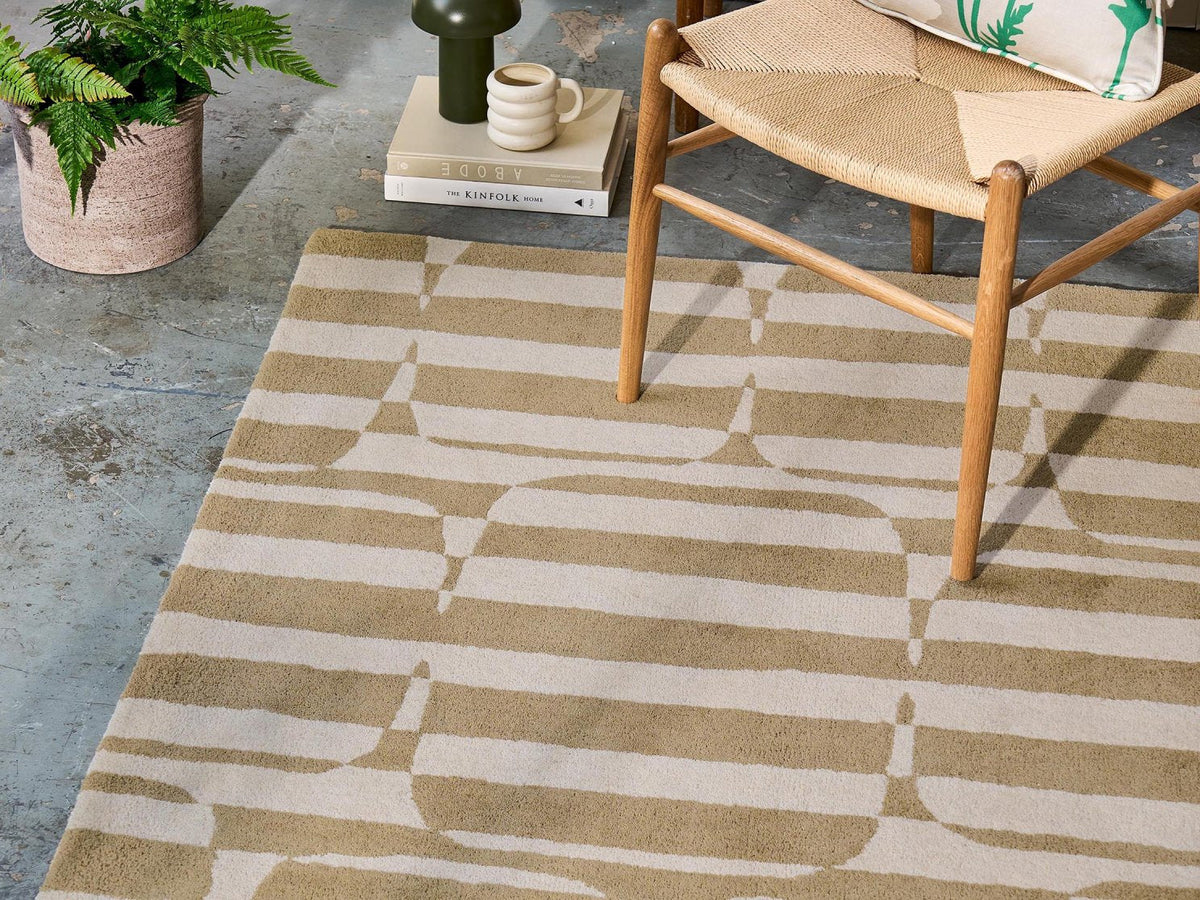
- Graphic and broken stripes: lines interrupted by blocks or shapes, such as the Lohko designs from Scion, bring a playful, mid-century feel.
Colour and contrast
The amount of contrast between stripes makes all the difference. High-contrast stripes, such as navy and ivory or black and white, are energetic and graphic and need a fairly calm room around them. Low-contrast stripes in neighbouring tones, such as oatmeal and stone or two shades of grey, behave almost like a plain rug with added texture. If you are new to pattern, start with low contrast; if you want the rug to be the focal point, go higher. For more on monochrome in particular, read black and ivory rugs.
Where striped rugs work best
- Hallways and landings: a lengthways stripe on a runner makes even a short hall feel more generous. Browse our runner rugs.
- Living rooms: a striped rug anchors a seating area and pairs easily with plain upholstery and patterned cushions.
- Children's rooms: stripes are cheerful but not childish, so they grow up well.
- Garden rooms and terraces: stripes have a natural affinity with outdoor living. Our outdoor rugs include striped designs made for the purpose.
Mixing stripes with other pattern
Stripes are perhaps the easiest pattern to combine with others because they are so orderly. A striped rug sits happily beneath a floral sofa, a checked armchair or a geometric cushion, provided the designs share at least one colour and differ in scale. Pair a broad-striped rug with smaller-scale prints on fabrics, or a fine-striped rug with bold, large-scale pattern above it. Our guide to mixing patterns explains the principles in more depth.
Getting the placement right
Because stripes are so linear, any misalignment is more noticeable than with other patterns. Take a moment to square the rug up with the walls or the main piece of furniture. If it sits beneath a sofa or bed, make sure the stripes run either parallel or perpendicular to it, never at a slight angle. A good underlay keeps the rug from creeping out of line over time; see our underlay range.
Flatweaves, pile and texture
Stripes appear across every kind of rug construction. In flatweaves and kilims, they are part of a long weaving tradition and have a crisp, relaxed character; explore our kelims and flatweaves. In pile rugs, stripes can be softened by texture, carved or created with different pile heights for a more tactile effect.
A decorator's note
A striped rug is the closest thing to a reliable trick in interior design: it brings order and energy at the same time, and it can quietly correct an awkward room. If you are unsure which direction or scale of stripe would suit your space, send us the measurements and a photograph, and our team will be happy to advise.