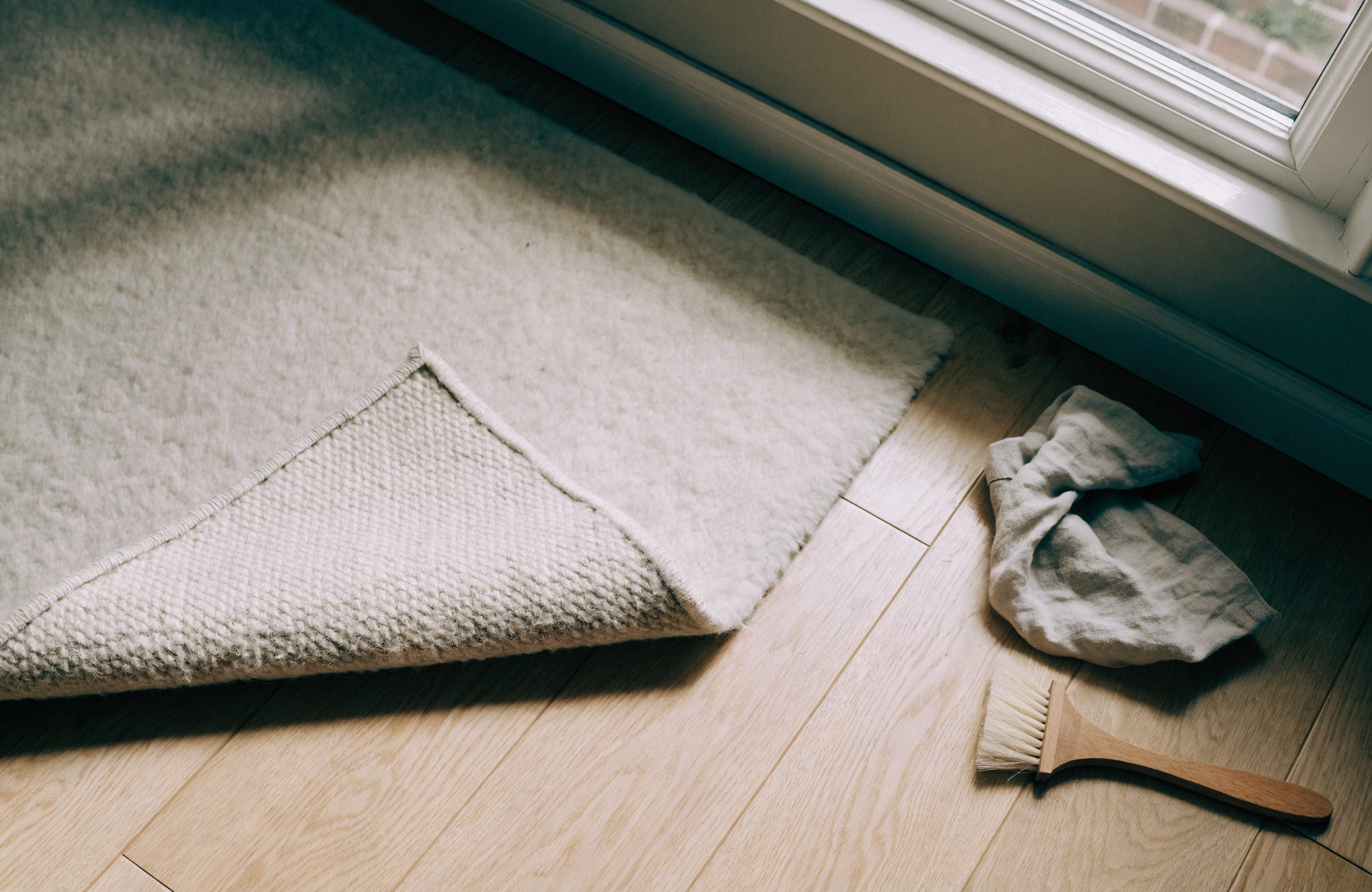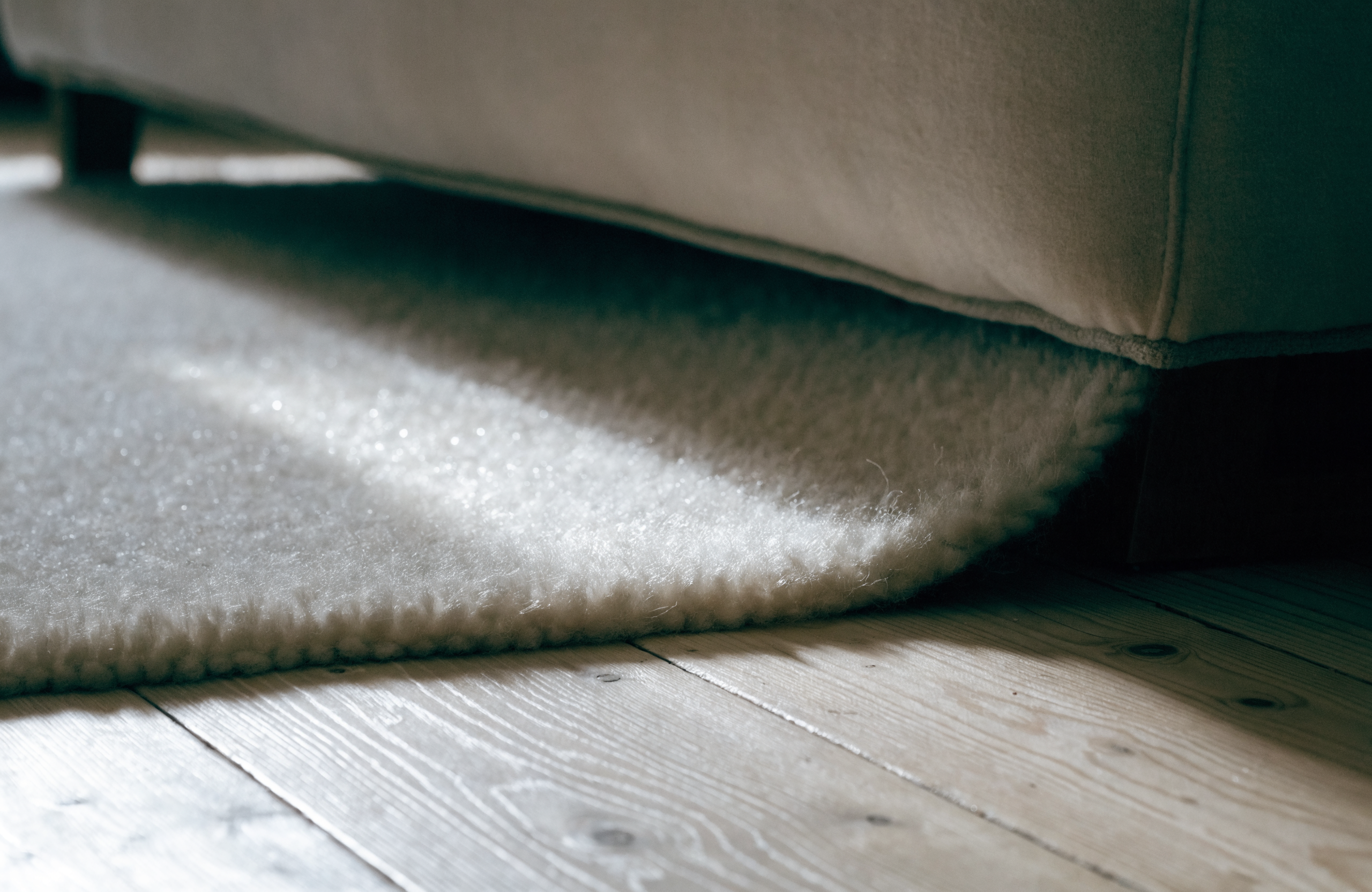
Why New Wool Rugs Shed — and What to Do About It
You unroll a new wool rug, admire it for a day, vacuum it at the weekend and empty a canister full of loose fibre into the bin. Then you do it again the following weekend. It is one of the most common reasons people contact a rug retailer in the first month of ownership, and in almost every case the rug is entirely fine.
Shedding is a property of new wool pile, not a defect in it. Understanding why it happens makes it much easier to live with — and makes it far easier to recognise the small number of cases that genuinely are a problem.
What Shedding Actually Is
Wool yarn is spun from staple fibres: short lengths of fleece, a few centimetres each, twisted together into a thread. However well spun the yarn, a proportion of those fibres are never fully locked into the twist, and they sit in the yarn waiting to be released.
Then the rug is finished. Cut-pile rugs are sheared level after weaving or tufting, and shearing generates an enormous quantity of short cut ends that settle down into the pile. Some are brushed and vacuumed out at the factory. The rest stay in the rug, work their way to the surface over the following months, and end up on your floor.
So what you are collecting is not the rug coming apart. It is manufacturing residue and loose staple leaving the pile — material that was never structurally holding anything together. The pile height does not drop, the density does not visibly change, and the rug looks exactly as it did.
Hand-tufted rugs shed the most, for structural reasons. Tufts are punched through a backing and held by an adhesive layer, and the shearing that creates the cut pile is aggressive, so there is simply more loose fibre in the system. Deep and shaggy piles shed for longer than short ones, because a long fibre has further to travel before it reaches the surface.
How Long It Lasts
For most new wool rugs, expect noticeable shedding for three to six months, tailing off steadily rather than stopping suddenly. It is heaviest in the first two or three weeks — genuinely alarming to a first-time buyer — and reduces sharply after the first month.
A deep-pile or shaggy wool rug can take up to a year to settle down completely, and a hand-tufted rug in a busy room may shed a little for as long as it takes to work all the cut ends out.
What Makes It Worse
Two things, and both of them are people trying to help.
The first is a vacuum with a beater bar — the rotating brush roll designed to agitate fitted carpet. On a wool rug it does not lift dirt so much as pull fibre, and it will extract loose staple that would otherwise have stayed put for months, along with tuft ends that were perfectly well anchored. On a hand-tufted rug it can also stress the bond between the pile and the backing. If your vacuum has a carpet or hard floor switch, use the hard floor setting, which lifts or stops the brush.
The second is over-vacuuming in the first few weeks. Vacuuming daily in an attempt to get to the end of the shedding faster simply keeps generating more loose fibre from the surface of the pile. It does not shorten the process.
Beating a new hand-tufted rug hard over a line is a poor idea too — the adhesive layer does not enjoy the shock. A gentle shake outdoors is fine.

What to Do Instead
Vacuum with suction only, using a plain floor head or an upholstery attachment, or with the machine on its lowest power setting. Run the head in the direction of the pile rather than against it — draw your hand across the rug and the direction it lies smoothly is the one to follow. Once or twice a week is plenty in the first month.
Keep the vacuum head off the fringes entirely; they should be combed by hand or shaken out. Rotate the rug end to end every few months, which evens out wear and traffic patterns as well as helping the pile settle uniformly. And accept that the canister will fill. The volume of loose wool looks far more dramatic than its weight, which is what matters.
Telling Shedding From a Genuine Fault
There are two things people mistake for shedding, and one thing that really is a problem.
Pilling is small balls of tangled fibre sitting on the surface of the pile, most common in softer, loosely spun wools and in areas of friction such as under a chair. It is not damage. Trim the pills off level with the pile using sharp scissors, or lift them away with a stiff brush; they generally stop appearing once the loose fibre has gone.
Sprouting is a single long tuft standing proud of the surface, which happens when one loop works its way up out of the pile. Snip it level with the surrounding pile with scissors. Never pull it — on a hand-tufted rug in particular, pulling a sprouted tuft can drag out a whole run of yarn and leave a track.
The genuine fault is a bald patch: an area where the pile has visibly thinned or come away in a clump, exposing the foundation or the backing. That is not shedding, and neither is a rug still shedding heavily after a year. Both are worth raising with the retailer, ideally with photographs taken in daylight.
Fibres That Barely Shed
If shedding is genuinely a dealbreaker, the construction matters more than the fibre. Flatweaves have no cut pile at all — every fibre is woven in and locked at both ends — so kelims and flatweaves shed almost nothing from new. Machine-woven polypropylene rugs are made from continuous filament rather than spun staple and are woven into the ground weave rather than glued in, so they too shed very little; many contemporary machine-woven designs are effectively shed-free from the day they arrive. Deep plain and shaggy wool piles sit at the other end of the scale, and are worth the patience.
New Wool Rugs at Kelaty
Every Kelaty listing states the fibre and construction, so you can judge in advance how much settling-in a rug is likely to need. If a new wool rug is shedding and you are unsure whether it is normal, it almost certainly is — but a photograph and a note will always get you a straight answer. Browse all ranges A–Z.