Rugs on Wooden Floors: Pairing Colour and Pattern With Oak, Walnut and Parquet
Wooden floors are one of the great pleasures of a British home, whether they are Victorian pine boards, Edwardian parquet or a newly laid engineered oak. They bring warmth and character, and they are a joy to live with. But a wooden floor also has a strong colour and grain of its own, and the rug you place on it needs to work with that rather than against it. Get the pairing right and the two flatter each other; get it wrong and either the rug disappears or the floor looks busy.
Start by reading your floor
Before you look at rugs, look closely at the wood. Three things matter most:
- Tone. Is the floor pale (limed or white oak, ash, birch), mid-toned (natural oak, honey pine), or dark (walnut, smoked oak, stained boards)?
- Undertone. Does it lean yellow, orange, red, grey or brown? An orange-toned pine behaves very differently from a grey, weathered oak.
- Movement. Wide boards with strong grain, or a herringbone or chevron parquet, already carry a lot of pattern.
Contrast is your friend
The most common mistake is choosing a rug too close in colour to the floor. A honey-coloured rug on honey-coloured oak tends to blur, and the room loses definition. Aim instead for a clear step lighter or darker.
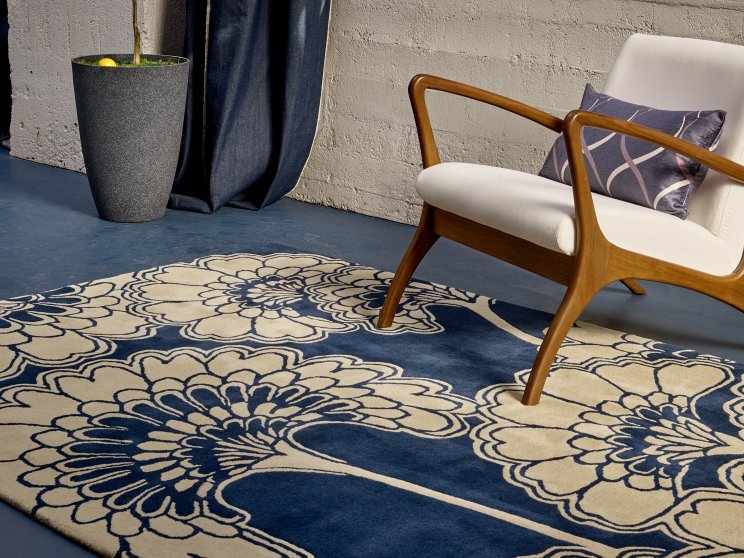
- On pale floors, mid to deep tones give a rug presence: charcoal, navy, rust, forest green, or a richly coloured traditional design. Pale rugs can work too, but choose one with texture or a cooler, greyer cast so it reads as separate from the boards.
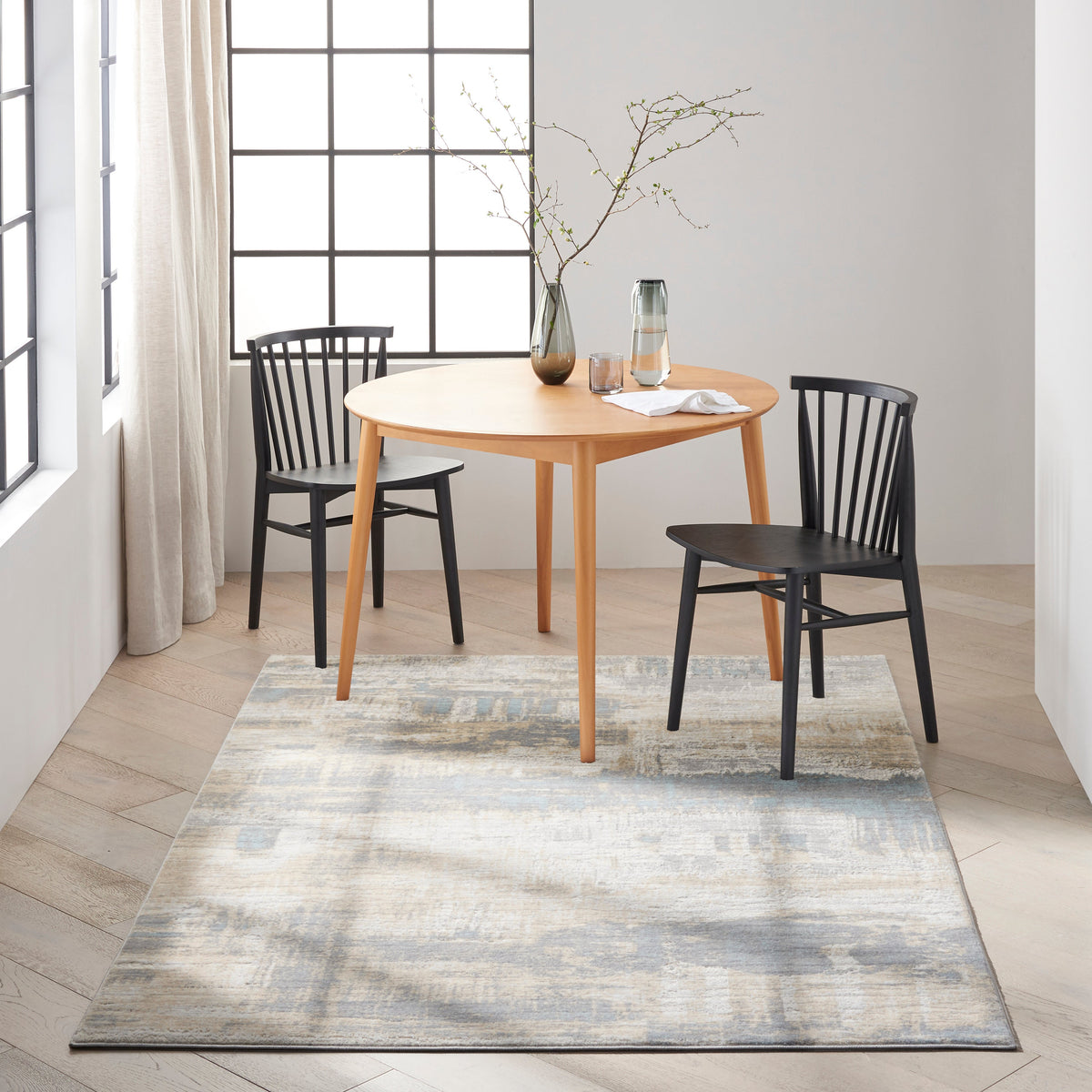
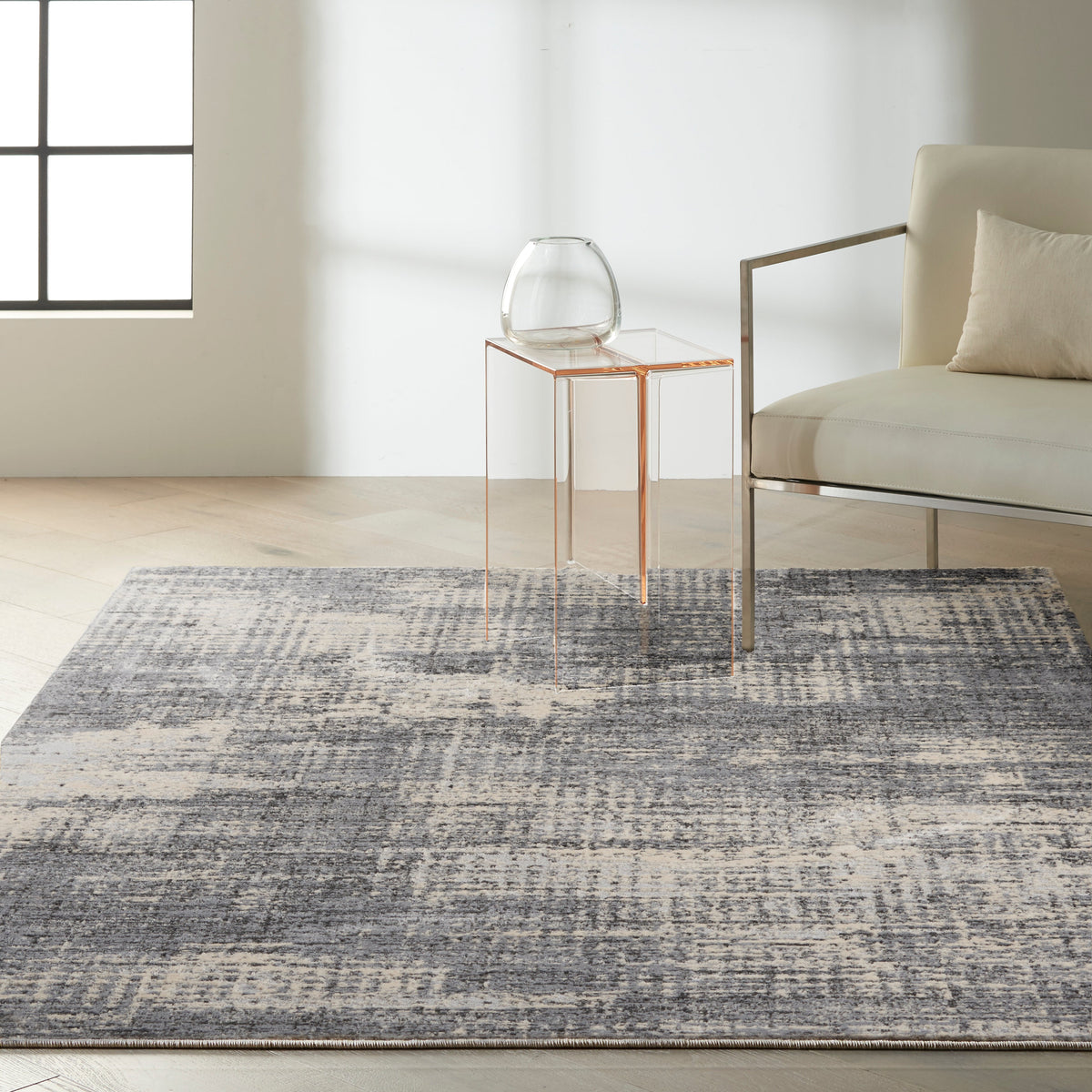
- On mid-toned oak, creams, stones and soft greys look fresh, while deep blues and greens look classic. Our beige and cream rugs are a reliable starting point.
- On dark walnut or stained boards, lighter rugs lift the room and stop it feeling heavy. Ivory, oatmeal and pale grey all sing against a dark floor.
Managing undertones
Undertone is where pairings succeed or fail. Orange-toned pine can clash with yellow-greens and warm beiges but looks wonderful with blue, which sits opposite orange on the colour wheel. Grey-toned or limed oak is cooler and pairs well with soft greys, sage and blue-grey, while red-toned woods such as cherry or mahogany are flattered by greens, creams and deep blues. If your floor is quite warm, a cool rug will balance it; if the floor is cool, warmer tones such as caramel, tan and rust will add comfort. Our brown rugs are especially good at warming a pale or grey floor.
Pattern on patterned floors
A herringbone or chevron parquet is itself a pattern, so think about scale. A plain or softly textured rug lets the parquet frame it beautifully, while a large-scale traditional or abstract design can hold its own because it reads at a different scale from the blocks. What tends to struggle is a small, busy geometric competing directly with the floor. For plain boards, there are fewer rules: a classic oriental or traditional design on timber is one of the most enduring looks in interior design, and kelims and flatweaves sit naturally on wood.
How much floor to show
Part of the pleasure of a wooden floor is seeing it. In most living rooms a border of roughly 30 to 60 cm of exposed floor around the rug looks balanced and lets the timber frame the space. In smaller rooms, a slightly narrower margin can make the room feel larger. Our complete UK size guide covers the proportions room by room.
Protecting the floor and the rug
Wooden floors are smooth, which means rugs can creep and corners can catch. A good underlay keeps the rug in place, adds comfort and helps protect both surfaces. Browse our underlay, and read how to stop a rug slipping on hard floors. A rug on boards also does a great deal to soften sound, which we explore in rugs and acoustics.
One practical point: sunlight fades wood over time, so a rug that never moves can leave a lighter or darker outline. Rotating or occasionally shifting your rug helps the floor age evenly.
A decorator's note
The best way to judge a rug against a wooden floor is in person, in daylight, with the rug lying flat on the boards. If you are unsure, send us a photograph of your floor taken in natural light, along with the room's dimensions, and our team will be glad to suggest colours and designs that will bring out the best in your wood.