William Morris Underfoot: Bringing Arts and Crafts Pattern to Your Floor
Few names in British design carry the weight of William Morris. Designer, craftsman, writer and campaigner, Morris led the Arts and Crafts movement in the second half of the nineteenth century, championing honest materials, skilled handwork and patterns drawn from the natural world. His famous advice, to have nothing in your houses that you do not know to be useful or believe to be beautiful, could have been written about a good rug.
Why Morris designs endure
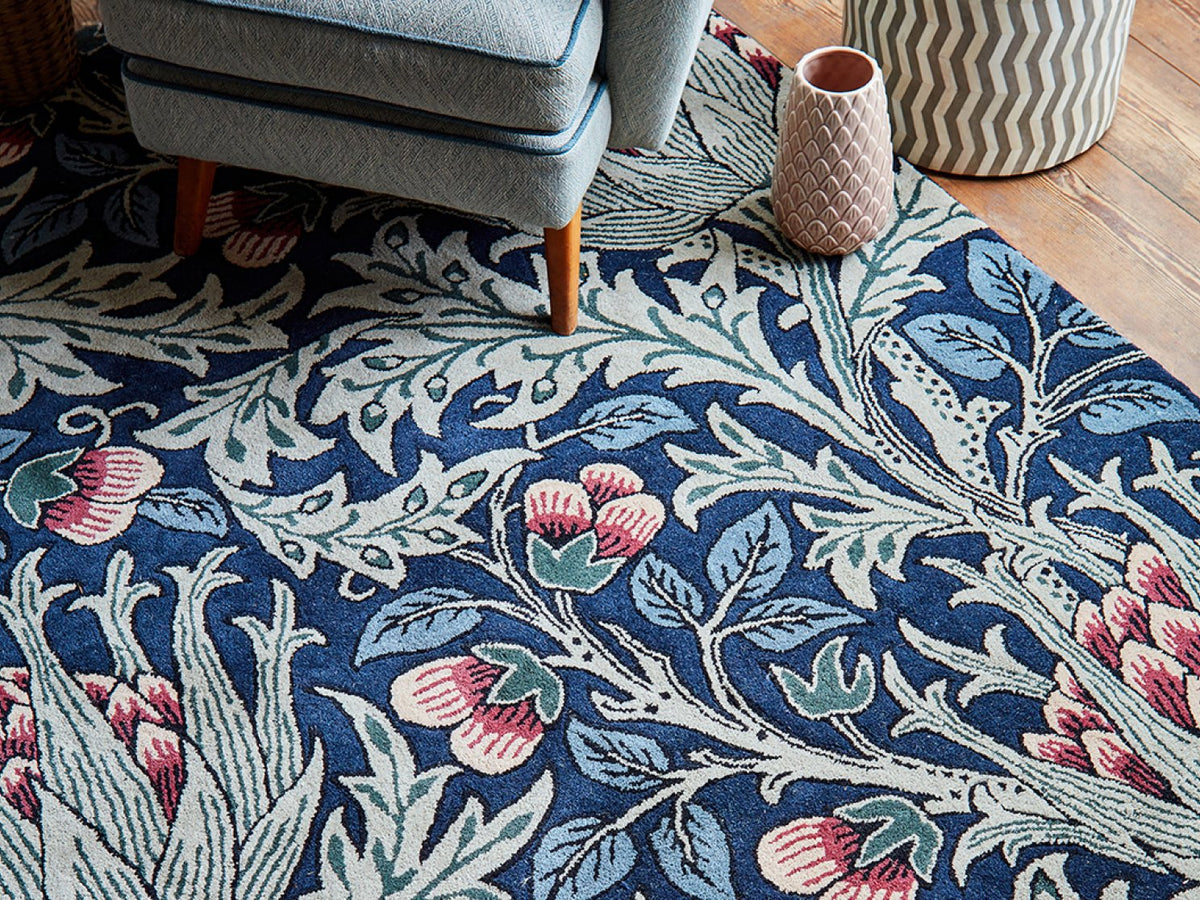
Morris patterns are rooted in observation of English gardens, hedgerows and woodland. Leaves twist, flowers bloom and tendrils climb in rhythms that feel natural rather than mechanical. The Morris & Co archive, which also includes designs by his successors such as John Henry Dearle, has remained in production for well over a century, and today's rug collections translate those patterns to the floor with remarkable fidelity.
Where a Morris rug works
- Period homes: Victorian and Edwardian houses are their natural setting. See our guide to rugs for period properties.
- Country and cottage interiors: painted furniture, oak and linen are perfect partners.
- Contemporary rooms: a Morris rug beneath a clean-lined sofa is unexpected and very chic. The pattern brings warmth and history to a minimal space.
Choosing a colourway
The same design can feel entirely different in a new colourway. Deep, traditional tones like aubergine or indigo create a rich, enveloping mood; softer colourways such as mineral greens and stone feel fresh and modern. Our Artichoke in Mineral is a good example of a historic design given a light, contemporary palette, while Pimpernel in Aubergine shows the drama of a deeper ground.
Living with pattern
A patterned rug is the anchor of a scheme, so let it lead:
- Pick one or two colours from the rug for cushions, throws or paint.
- Pair large-scale pattern with plain upholstery, and smaller-scale patterns with larger ones.
- If you love pattern everywhere, keep the palette tight. Our guide to mixing patterns shows how.
A practical bonus
Busy botanical patterns are wonderfully forgiving. They disguise everyday marks and wear far better than plain rugs, which makes them a sensible choice for living rooms and family spaces as well as a beautiful one.
A decorator's note
Morris designed many of his patterns for walls and fabrics first. If you already have Morris wallpaper or curtains, choose a different design for the floor, or the same design in a contrasting scale or colourway, so the room feels layered rather than matched.