Article: Hand-Knotted, Hand-Tufted or Machine-Made? How Rugs Are Made and Why It Matters
Hand-Knotted, Hand-Tufted or Machine-Made? How Rugs Are Made and Why It Matters
Two rugs can look almost identical in a photograph and yet be entirely different objects: one knotted by hand over many months, another tufted with a hand-held tool, a third woven on a power loom in a matter of hours. None of these is simply 'good' or 'bad'. Each has its place, and knowing the difference is the surest way to understand what you are paying for.
Hand-knotted
This is the oldest and most labour-intensive method. A weaver ties individual knots of yarn around the vertical warp threads of a loom, row by row, then beats each row down and trims the pile. The knots are the rug; there is no glued backing holding anything in place.
Because every knot is placed by hand, a hand-knotted rug carries small irregularities that give it life. Density is often described in knots per square inch, and a higher count allows finer, more detailed patterns. Turn one over and the design shows clearly on the back, almost as sharply as on the front.
Why choose it: longevity, character and value retention. A well-made hand-knotted wool rug can last for generations and can be cleaned, restored and passed on. Our guide to Persian and oriental rugs goes deeper into what to look for.
Hand-tufted
A hand-tufted rug is made by punching loops of yarn through a canvas backing with a tufting gun, following a pattern drawn on the canvas. The loops are then sheared to create a cut pile, a latex adhesive is applied to hold them in place, and a secondary cloth backing is added.
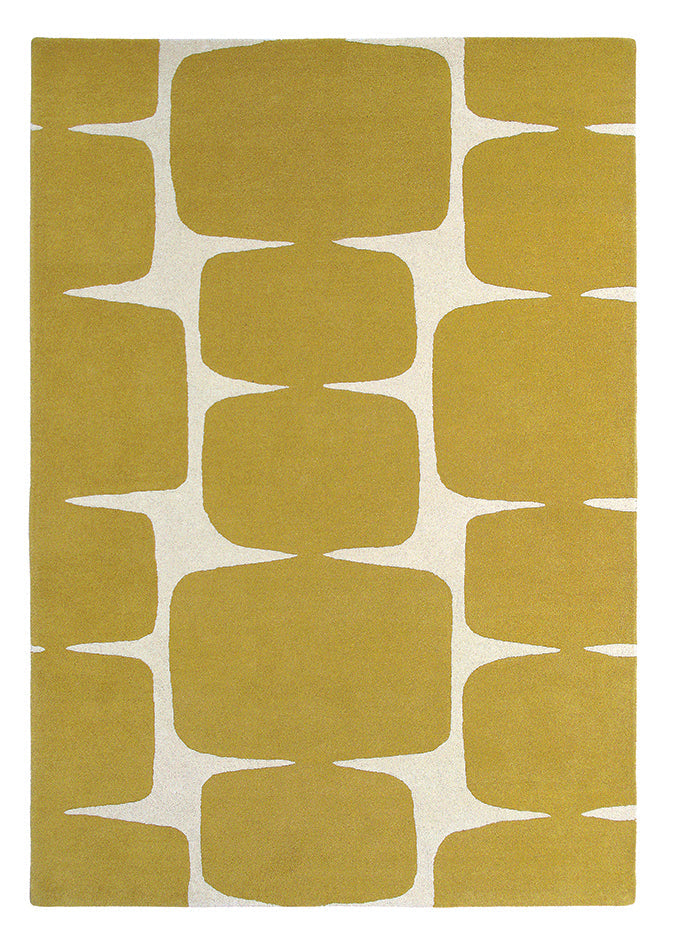
Tufting is far quicker than knotting, which makes it possible to produce plush, richly coloured designs at a more accessible price. It is also the method behind many contemporary designer rugs, where bold shapes and sculpted, carved pile matter more than fine curvilinear detail.
Why choose it: a soft, dense pile and strong design for less than a hand-knotted piece. Expect a little shedding at first, which is normal for wool pile; we explain why in why new wool rugs shed.
Hand-woven flatweaves
Kilims, dhurries and soumaks are woven by hand on a loom without any pile at all. The pattern is formed by the weft threads themselves. They are light, reversible in many cases, and very hard-wearing. Browse our kelims and flatweaves, or read why we think they are the most versatile rug you can buy.
Machine-made (power-loomed)
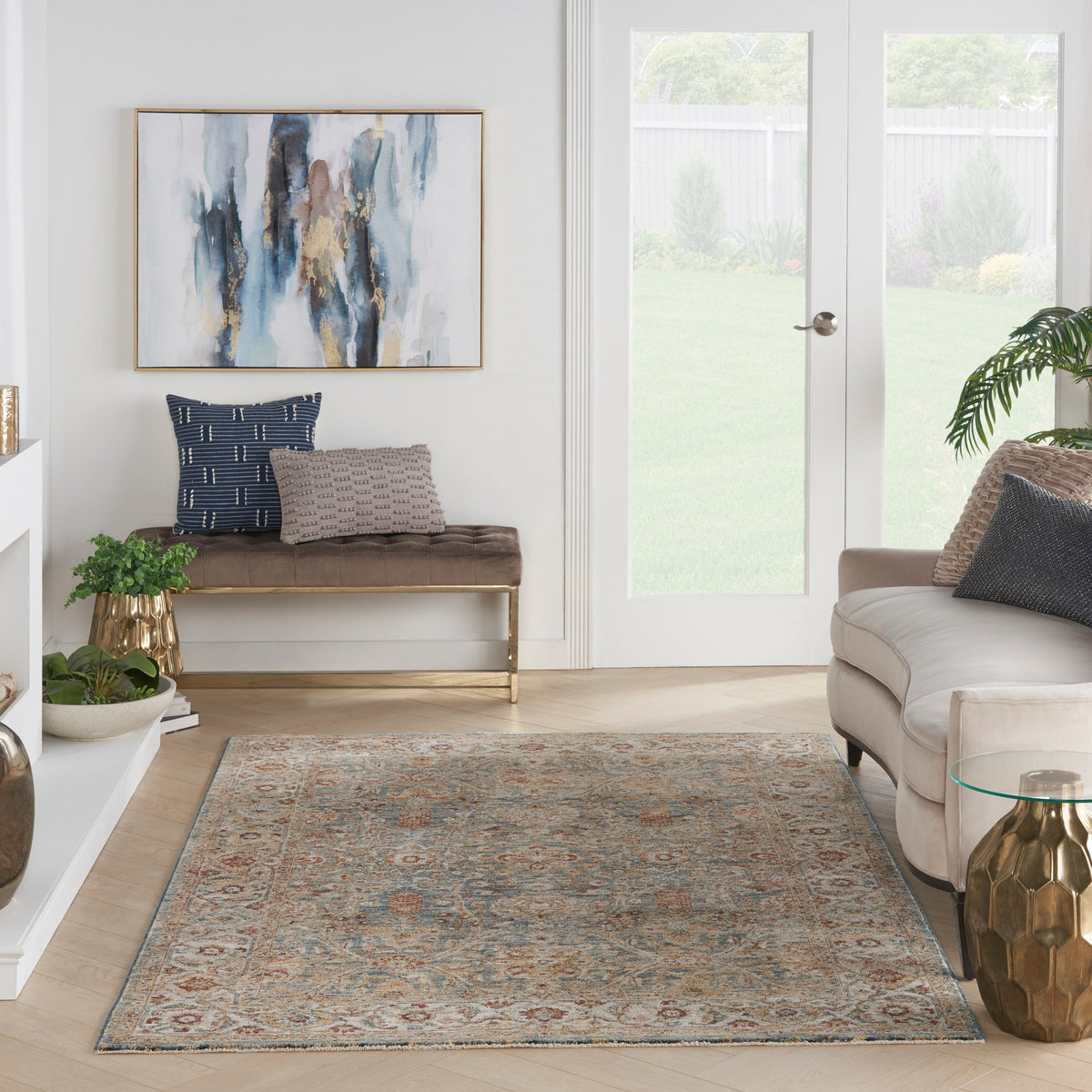
Modern power looms weave pile rugs with remarkable precision, often in wool, polypropylene, viscose or blends. They can reproduce traditional designs faithfully, achieve very fine detail and deliver consistent quality at a price that makes a large rug achievable for most rooms.
Why choose it: value, consistency and practicality. Machine-made rugs are often the sensible choice for busy family spaces, rented homes, dining rooms and anywhere a rug will work hard. Many of the traditional designs in our oriental and traditional collection are made this way, bringing a classic look within reach.
How to tell the difference
- Look at the back. A hand-knotted rug shows the pattern clearly with slight irregularity. A tufted rug has a cloth backing. A machine-made rug shows a very even, grid-like weave.
- Check the fringe. On a hand-knotted rug the fringe is the end of the warp threads. On many other rugs it is sewn on afterwards. Our guide to reading a rug's construction explains more.
- Read the description. Construction and material should always be stated. If it is not, ask.
Which is right for you?
Think about the room and how long you want the rug to stay. For a heirloom in a formal sitting room, hand-knotted is hard to beat. For a sculptural designer statement, tufting often delivers the look. For a hallway, family room or a first home, a good machine-made rug gives you style and resilience without anxiety.
A decorator's note
Construction tells you how a rug will age, not only how it looks today. When comparing prices, compare like with like, and read our piece on what you are actually paying for in a designer rug. If you would like advice on a specific piece, our team is always happy to help.