Article: How to Vacuum a Rug Properly: Settings, Direction and How Often
How to Vacuum a Rug Properly: Settings, Direction and How Often
Ask anyone in the rug trade how to make a rug last and the first answer is nearly always the same: vacuum it regularly. Grit and dust work their way down into the pile and, every time someone walks across the rug, they act like fine sandpaper on the fibres. Removing that grit is the most effective care you can give. But not all vacuuming is equal, and the wrong setting or technique can cause fuzzing, pulled threads or damaged fringes. Here is how to do it properly.
How often?
- High-traffic areas: hallways, living rooms and rugs near an outside door benefit from vacuuming two or three times a week, especially in autumn and winter when more dirt comes in on shoes.
- Bedrooms and quieter rooms: once a week is usually enough.
- Both sides: every few months, turn the rug over and vacuum the back. This loosens grit that has worked its way right through, which you can then vacuum up from the floor and the front of the rug.
Choose the right setting
The single most important thing is how you use the rotating brush, or beater bar, on your vacuum cleaner.
- Low-pile and flatwoven rugs: many can cope with a brush, but set it to the highest height so it skims rather than digs. If in doubt, use suction only.
- Hand-knotted and hand-tufted wool: use suction only, or a brush on a gentle setting. An aggressive beater bar can fuzz the surface of the pile over time.
- Shaggy and deep-pile rugs: always switch the brush off. The long strands can wrap around a spinning roller. Our guide to living with deep pile has more on caring for shaggy rugs.
- Viscose and silk-effect rugs: use gentle suction only, with no brush, as these fibres are softer and more delicate. See living with a lustrous rug.
- Natural fibres such as jute and sisal: suction is ideal, as dirt tends to fall through the weave to the floor beneath.
A handheld or upholstery attachment is often the best tool of all for smaller rugs, runners and anything delicate.
Direction matters
Most pile rugs have a nap: the fibres lean slightly in one direction. Run your hand across the rug and you will feel it, as the pile feels smooth one way and rougher the other. Vacuum in the direction of the nap for the final pass. This leaves the pile lying neatly and gives the rug an even colour. Going against the nap occasionally can help lift flattened pile, but always finish with the grain.
Work slowly in overlapping strips. A quick pass picks up surface fluff but leaves much of the grit behind.
Look after the edges and fringes
Fringes are the most easily damaged part of many rugs. Never run a vacuum with a rotating brush over them, as it can catch and pull the threads. Instead, vacuum up to the fringe, then use a handheld attachment or gently brush the fringe straight by hand. Take care along the bound edges too.
New rugs and shedding
Many new wool rugs shed loose fibres for the first few weeks or months. This is normal and is not a sign of a fault. Regular, gentle vacuuming with suction only is the best way to deal with it. Read more in why new wool rugs shed.
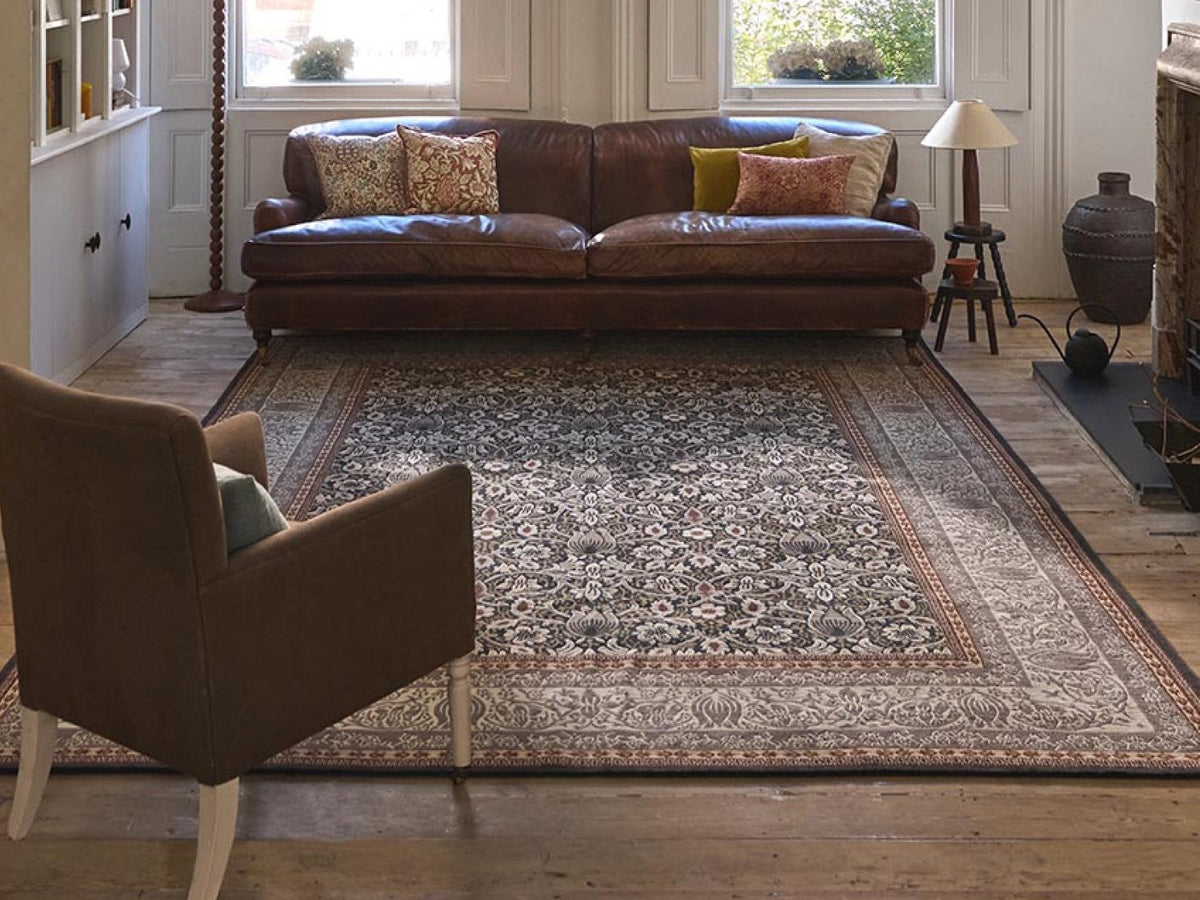
One rug that shows how far construction affects care is the Morris & Co Borage in Grey, which is hand-knotted in Nepal from Tibetan wool, with no latex layer or secondary backing. Rugs like this reward gentle, regular vacuuming rather than vigorous brushing.
Vacuuming and moths
Regular vacuuming also helps prevent moth damage. Moths favour dark, undisturbed areas, so pay particular attention to the parts of a wool rug that sit under sofas, beds and sideboards. Our guide to moths and wool rugs explains what to look for.
What vacuuming cannot do
Vacuuming removes dry dirt but not spills or stains. For those, act quickly and blot rather than rub. Our guide to cleaning and caring for your rug at home has more on spot cleaning and everyday care.
A decorator's note
Ten minutes of careful vacuuming a week will do more for a rug than any amount of occasional deep cleaning. If you are unsure how to care for a particular rug, check the care information on its product page or ask our team, and we will gladly advise on the right approach for its fibre and construction.