The Reading Room: Choosing a Rug for a Library, Study or Quiet Corner
Every home benefits from a room, or at least a corner, set aside for quiet: a study lined with books, a home library, or simply a favourite armchair with a good lamp beside it. As the evenings lengthen, these are the spaces we retreat to, and the rug is what makes them feel finished. It softens footsteps, warms the floor, frames the furniture and sets the mood far more than its size would suggest.
Start with the furniture
The best reading spaces are built around one or two key pieces, and the rug should be sized to hold them together.
- A single armchair: choose a rug large enough for the chair, a side table and your feet. At the very least, the front legs of the chair should sit on it, so the arrangement feels anchored rather than floating.
- A pair of chairs: a rug that sits under the front legs of both chairs, with a small table between them, creates a natural conversation or reading zone, even within a larger room.
- A desk: allow enough rug for the chair to be pulled out and pushed back without the back legs dropping off the edge. Our guide to home office rugs covers chair wheels and working spaces in more detail.
- A corner nook: a round rug is often the neatest answer in a corner or bay, softening the right angles of shelving. See where round rugs work and how to size them.
The case for pattern
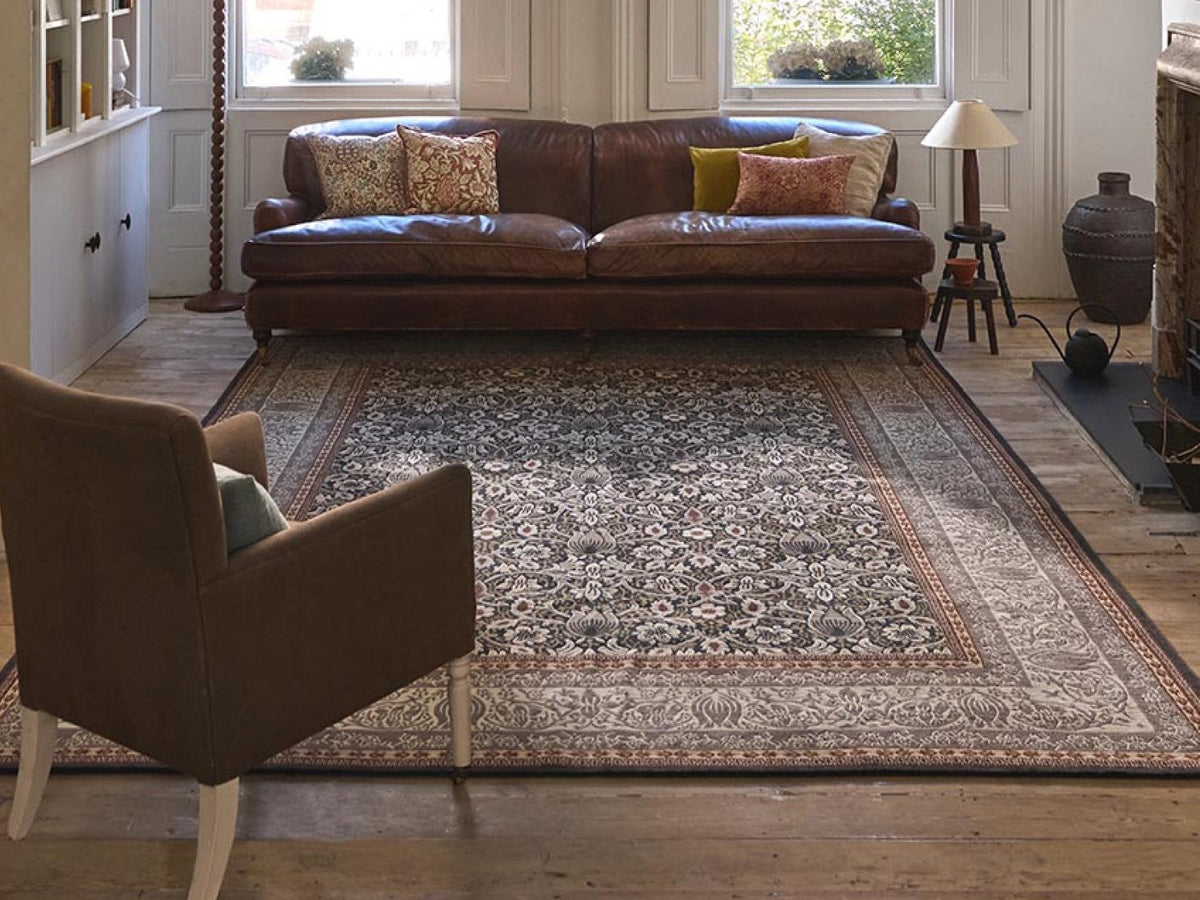
A library or study is one of the few rooms where a richly patterned rug almost always looks right. Rows of book spines are themselves busy and colourful, and a quiet plain can look lost beside them. A traditional or archive design holds its own and gives the room a sense of having been gathered over time.
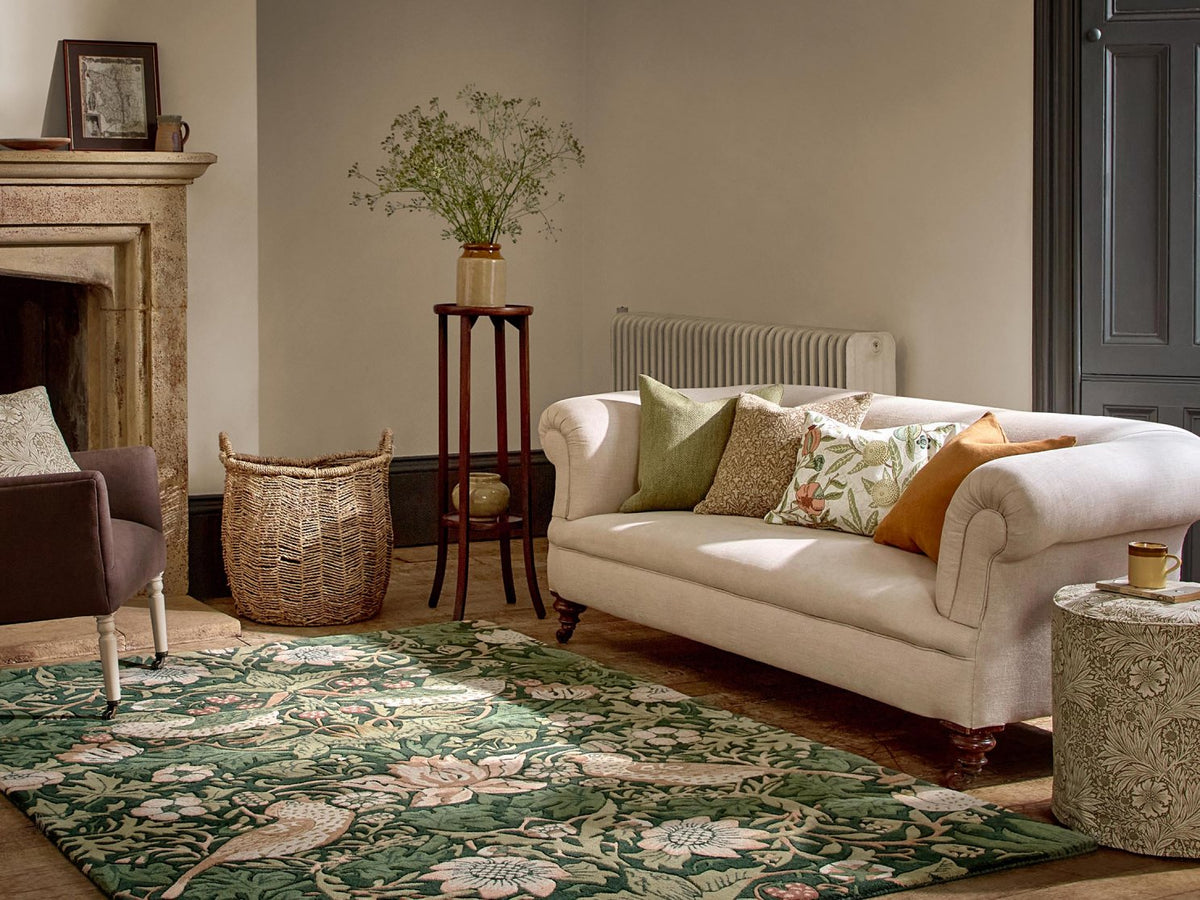
The Morris & Co Strawberry Thief in Forest is a fine example. William Morris's thrushes face each other beneath arching foliage on a deep green ground, and the colour sits beautifully with dark wood, leather and brass. Explore the wider Morris & Co collection, or our oriental and traditional rugs for classic medallions and borders.
For a more contemporary study, a small-scale geometric works well. Scion Little Lohko in Indigo sets rows of softly rounded blocks in a deep, inky blue, picked out with fine pale lines: dark enough to be practical, but never heavy.
Colour and mood
- Deep greens and blues are calming and suit the traditional library look, especially against dark paint or timber shelving.
- Warm reds and russets make a study feel enveloping on a winter evening, and look wonderful in lamplight.
- Soft neutrals keep a small reading corner feeling light, particularly in a room that also serves another purpose.
Texture and sound
Quiet rooms benefit enormously from a rug with some substance. A wool pile absorbs sound, so footsteps, chair movements and the echo of hard floors are noticeably softened. If your study has bare boards or tiles, our guide to rugs and acoustics explains how much difference the right rug can make. A good underlay adds further comfort and helps keep the rug flat and in place.
Bear in mind how you use the space. If you like to sit on the floor with a stack of books, a softer, deeper pile is a pleasure. If a desk chair will be rolling across the rug every day, a lower, denser pile is more practical.
Period rooms and studies
Many British homes have a small front room or back parlour that makes a perfect study. If yours is in a Victorian, Edwardian or Georgian property, our guide to rugs for period properties will help you choose a design that respects the architecture.
A decorator's note
A reading room should feel unhurried, so resist the urge to fill every inch of floor. One generous rug that gathers the chair, lamp and table together will do more than several small ones. If you would like help finding the right size or design for your study or reading corner, send our team the room measurements and a photograph and we will gladly advise.